Telling the Story Behind the Deal
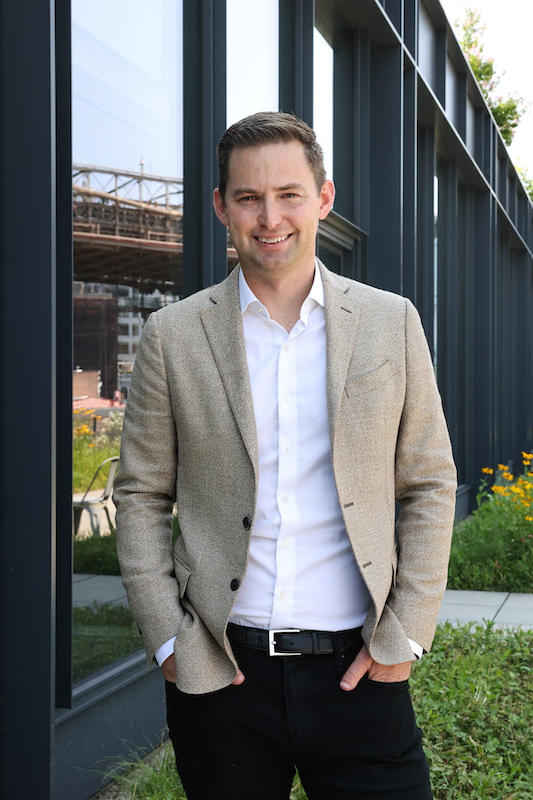
Connor Swarbrick (’11), Senior Vice President, THE⬝TEAM
Breaking into sports marketing can be challenging. Looking back at your time at Wake Forest, how did you translate your business degree into an entry point for your first role?
I knew from a fairly early age that I wanted to work in sports business, and I was fortunate to grow up with a dad who worked in the industry. At that time, Wake Forest didn’t have a sports business program, and honestly that was an intentional choice for me. I wanted a well-rounded business education because that’s ultimately what the job is—I just knew where I wanted to apply it.
From the beginning, I was intentional about seeking out internships and staying plugged into industry news so that when I walked into a room to interview, I could “talk the talk”. For a project in my negotiations class, we got to pick any negotiation we wanted to study; naturally, I picked a sports negotiation—the PGA TOUR’s television media rights. I did informational interviews with four members of the golf division at THE·TEAM, and as a college senior I knew what I was talking about purely by virtue of having studied it in a class. A couple of days after graduation, a job came open in the golf division at THE·TEAM and that project was a big reason I got the job.
At THE ⬝TEAM [a global sports, music and entertainment company] you lead a 100+ member team on the American Express account where you strategize, negotiate and activate on behalf of the brand. What do you look for when hiring, and what skill matters more than people expect?
I look for good people who are willing to jump in, work hard and who are passionate about this work. People who love the business of sports, not because they’re fans. They can be a fan, but that’s not why they are here.
The most undervalued skill is the ability to tell a story and communicate it clearly, both orally and visually. I also studied journalism which has been instrumental to my success. As consultants, we’re trying to guide a client or a partner toward a decision, which takes strong rationale and clear communication. A huge part of the value we bring is turning data into insight and then using it to tell a story.
Amex became a global Formula 1 partner and signed a landmark deal with the NFL in the same stretch. What stands out most?
I’m especially proud of the work we did with Formula 1, which was Amex’s first new major sponsorship vertical in 10 years. The trickiest part was how Formula 1 events are run: local promoters control the main grounds, while Formula 1 itself controls the track and the Paddock Club. We wanted American Express Card Members to feel our presence everywhere they turned at the event, so uniting all those separate rights into a single deal required a lot of creativity and intense negotiation. While we aren’t lawyers, our team played a key role in shaping how the business side of the deal worked.
The NFL partnership is just as huge. Bringing the American Express brand alongside the NFL logo is a once-in-a-career moment for us, and a game-changer for both the industry and American Express.
You’ve spent 15 years in this industry. What’s changed, and where is it heading?
The sophistication of the business is unquestionably what has changed the most. A lot of franchises were family-run when I started and now they’re full-blown businesses. When I joined my company, we had 200 people and now we’re over 4,000 today. The sports consulting business was an industry I didn’t know existed and frankly most people didn’t. The future structural change is now the influx of private equity.
On the fan side, I think you’ll see the connected journey of the fan. We are seeing the start of entertainment districts being built around venues, similar to what WFU is doing in its own way with The Grounds. Fandom is much more than sitting in a seat on a Saturday or Sunday.
What advice would you give a current Wake Forest student hoping to break into sports business?
Be curious. Do lots of informational interviews. Volunteer. Growing up, I spent a lot of time volunteering at events when they came to Indianapolis. Even in a small role, you get to look around and see how the whole ecosystem works; being on-site in a working capacity is very different from being a fan. Don’t be afraid to try different parts of the industry before you find your fit. I interned with a team and with a league but wound up at an agency.
Who along the way deserves a shoutout for helping you get here?
My parents and my wife. My mother especially. She didn’t have the opportunity to attend the school she wanted growing up, and when I was hemming and hawing between a couple of options she urged me to go to Wake Forest. She knew it would set me up for success.
My dad showed me what leadership looks like. When I was growing up, he was a lawyer but he was also chairman of the Indiana Sports Corporation [a volunteer role essentially building a city around sports]. His experience in that role had a significant impact on me.
And my wife Stacy, whom I met at Wake Forest. With a toddler at home and my travel schedule, she is the hero in all of it.
How closely do you follow Deacon sports now, and what’s your favorite memory from your student years?
College athletics is the one thing I’ve never worked on professionally, so it lets me just be a fan. There’s a Wake Forest helmet hanging on my office wall, and now that we’re living in Charlotte, I’m a season ticket holder for the first time.
My favorite memory is from 2009 when we were number one in basketball. One of the guys on that team was from my hometown [Jeff Teague] and we’d grown up together, which made it that much cooler.
Is there a bucket-list event you still haven’t gotten to?
The Olympics. I’ve never been to one. I was one of the first three employees on what is now LA28 [the private, non-profit organizing committee responsible for planning and hosting the 2028 Summer Olympic and Paralympic Games in Los Angeles]. That has probably been the most fulfilling experience of my career—taking a plan from a blank slate to an organization the whole country will rally around. Being on-site for an Olympics on home soil, where I played a small part, would be the definition of a bucket-list moment.
Spotlight interview conducted by Alumni Council member Molly Rutledge (’04, MSBA ’20).
