Yeongin Kim
Shepherding Technology
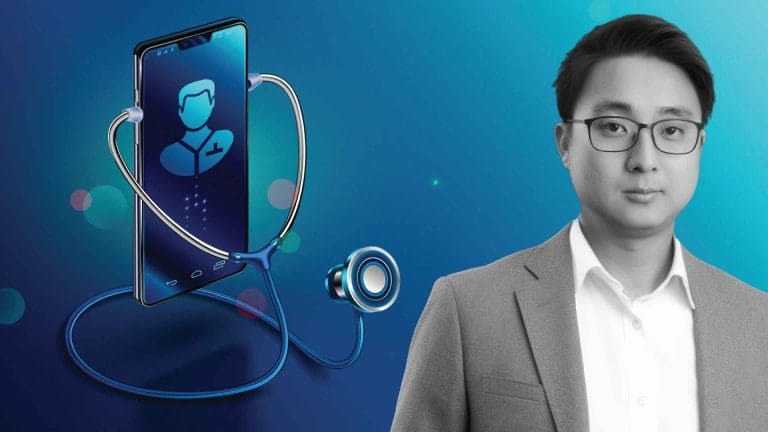
In broad strokes, Yeongin Kim strives to understand how digital technologies transform decision-making. “I aim to ensure they are used responsibly to create value for individuals, business and society.” Kim’s goal of understanding how information is exchanged and how technology shapes that process has led his research in several interesting directions.
Position
Education
- Ph D, University of Texas at Dallas (Management Science (Information Systems concentration)) – 2018
- MS, Texas A&M University (Industrial & Systems Engineering) – 2013
- BS, Inha University (Industrial Engineering) – 2007
Research Interests
- Interoperability in Healthcare
Data Analytics and AI in Medical Litigation
Patient-Centric IT to Improve Healthcare Outcomes and Disparities
Platforms’ Entry and Antitrust Regulation
Multi-Sided Platforms and Competition Strategies
Decision Support Systems in Social Media Platforms
Teaching Interests
- Decision Modeling, Optimization, Machine Learning, Computer Programming, Healthcare Analytics
In broad strokes, Yeongin Kim strives to understand how digital technologies transform decision-making.
“I aim to ensure they are used responsibly to create value for individuals, business and society,” explains Kim, assistant professor of analytics, who joined the faculty in 2024.
Kim’s goal of understanding how information is exchanged and how technology shapes that process has led him in several interesting directions, for instance, studying how technologies such as electronic health records and patient-generated data affect the way doctors and
patients make decisions.
Kim also examines how companies like Amazon or Uber design their business models, how they compete and what kinds of challenges arise. Some of his most recent research investigates how artificial intelligence tools are reshaping decision-making in health care and platform settings.
His work has appeared in leading journals, including Information Systems Research, MIS Quarterly, Decision Support Systems, and Information & Management. He has received best paper awards from INFORMS and the Decision Sciences Institute.
Kim points to a paper published in MIS Quarterly in 2022 as representative of his work. It looked at how data sharing affects physicians’ defensive medicine practices, the consequences of that, and potential policy interventions. When Kim began the research a decade ago, most studies focused on the benefits of data sharing.
“But in conversations with physicians, my co-authors and I heard about unintended consequences, especially concerns about legal responsibility. More information can lead to better decisions, but it also provides more evidence that can be used to prove physician mistakes. This may encourage defensive medicine, such as over-treatment.”
“Our paper used mathematical modeling to examine when this happens and how policymakers, such as CMS (Centers for Medicare & Medicaid Services) or the American Cancer Society, should design data-use policies to mitigate it,” Kim continues. “I am proud that it was one of the early papers to connect health IT and legal responsibility, and it helped spark more discussion.”
One of Kim’s current projects studies patient-generated health data (PGHD), using mathematical decision models to examine key questions.
“Increasingly, patients generate health data outside hospitals using devices, such as Apple Watches, Fitbits or personal medical devices. My research asks how much effort patients put into generating and managing PGHD and under what conditions physicians incorporate PGHD into their decision-making.”
Health professionals agree that PGHD has potential to improve patients’ health, Kim says, but there isn’t consensus on how best to incorporate the data into their clinical decision-making.
“Studying the optimal way to use PGHD while considering the incentives of all stakeholders is a very challenging problem. Because it is a problem no one has fully solved, I find it exciting.”
As someone who studies AI-related issues and uses generative AI in his work every day, including to jump-start ideas and refine writing, Kim understands its power. “But I also know that AI outputs are not perfect, and they cannot replace human abilities entirely, so I always use it critically and with caution.”
Kim has undergraduate and master’s degrees in industrial engineering and planned a career in industry, but a professor in his master’s program encouraged him to consider a PhD through the University of Texas at Dallas’ management science program.
“I was drawn to its emphasis on business implications rather than purely technical/engineering concerns,” he remembers. “At that time, I still did not plan to stay in academia, but I found research rewarding … Looking back, I think good mentors and colleagues guided me into academia.”
Like many faculty members, Kim was drawn to Wake Forest University because of its commitment to the teacher-scholar model. He also values the School of Business’ “close connection to industry and practice.”
“This environment allows me to pursue projects that not only advance theory but also have tangible impact in the real world.
It also enables me to bring those experiences back into the classroom, so students see how research translates directly into practice.”
Recent Research
Health Communication
Health Communication
Decision Support Systems
Decision Support Systems
MIS Quarterly
MIS Quarterly


Explore Further
Considering a business program to strengthen your career prospects? Interested in the world-class research being done by our faculty? Or just want to speak with someone to learn more about the School of Business? Here are a few more areas to explore.
