Stephen Smulowitz
Pursuing Sustainability
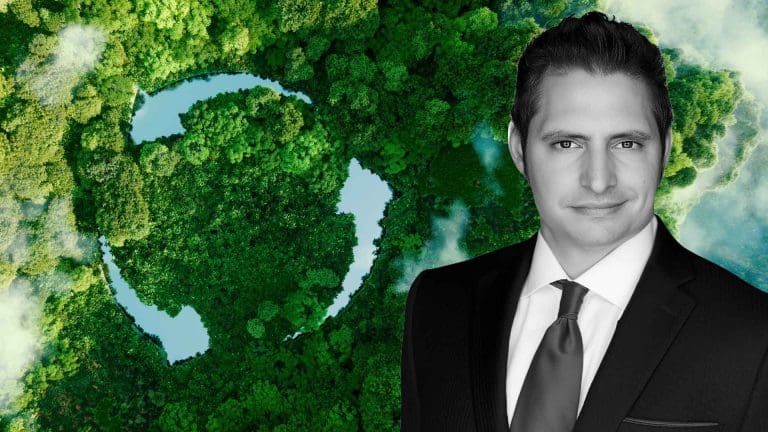
In both his research and his work in the classroom, Smulowitz focuses on corporate governance and how it can affect sustainability. “I like to challenge students with the idea that there’s this transition to sustainability. What does sustainability mean, and how can we get there?”
Position
Education
- Ph D, IESE Business School – 2017
- MS, IE Business School – 2014
- JD, University of Pennsylvania- 2004
- BA, Binghamton University- 2001
Research Interests
Teaching Interests
- Steve teaches in the areas of strategy, stakeholder management, and risk management to executives, board members, master’s students and undergraduates in custom and degree programs.
Stephen Smulowitz didn’t always intend to work in academia. After earning a Juris Doctorate from the University of Pennsylvania Law School, he began his career as a lawyer clerking in the Delaware Court of Chancery before working with the firm Skadden, Arps, Slate, Meagher & Flom LLP, and with the Securities Exchange Commission (SEC) in Washington, D.C.
Years later while working as a lawyer in Miami, Smulowitz realized it was time for a change.
“I realized that practicing law wasn’t where I found the most fulfillment,” he shares. “What truly excited me was the opportunity to explore ideas through research and to help students discover their own ways of thinking.”
Smulowitz enrolled in IESE Business School in Barcelona, Spain, and earned a PhD in 2017. Upon graduation, he worked at the IMD Global Board Center in Switzerland, conducting research and executive education focused on corporate governance and boards of directors. In 2023, Smulowitz and his family relocated to the United States, and he took on an assistant professor role at Wake Forest, teaching strategy to both undergraduate and graduate students.
In both his research and his work in the classroom, Smulowitz focuses on corporate governance and how it can affect sustainability.
“I like to challenge students with the idea that there’s this transition to sustainability. What does sustainability mean, and how can we get there?”
Smulowitz conducted a case study of R.J. Reynolds Tobacco Company, a Winston-Salem institution with strong ties to Wake Forest. The study examines that connection through the lens of Reynolds’ efforts to be more sustainable while still producing a product that can cause cancer.
“Wake Forest would not be here if not for the Reynolds family donating the property to the University, but they also sell a product that kills people. My mother died of lung cancer, so I don’t want anyone to smoke, but I also wanted to look at how Reynolds has been making a transition to investing in things such as diversity and inclusion, environmental sustainability, investing in local communities and using renewable resources.”
The study allowed him to explore the complexities of businesses making these moves toward sustainability, while also encouraging his students to take a more nuanced approach to thinking about companies such as R.J. Reynolds.
Smulowitz also conducts research on diversity and inclusion, along with sustainability in business. These timely topics are more than just buzzwords. He adds that advancing women into leadership roles isn’t only a moral imperative but a strategic one. As women make up most graduates in higher education and professional fields, companies that tap into that talent pool are better positioned to compete.
Moreover, as more women rise into leadership roles, Smulowitz says it’s essential to understand how their presence shapes corporate strategy and decision-making, a key topic in his research. “I have one paper looking at the effect of having more women on the boards of directors and their investments in sustainability. We find that when you have more women on the board, they’re more consistent with their investments, and it leads to firms being more consistent in their sustainable strategies.”
Another study focused on wrongdoing in organizations and how it has significantly increased over time. Smulowitz brings that research into the classroom to illustrate to students how wrongdoing can proliferate even when companies think they’re doing everything right.
“Firms are committing more and more wrongdoing, and I put that evidence in front of the students and ask, ‘Why is this the case?’ Normal organizational structures such as incentive programs and pressures in a hierarchical organization can lead to more wrongdoing. When I present this to executives, they’re very resistant because they don’t want to think it’s happening at their firm. So we have to get the idea across that yes, it could happen to you, and it takes a significant amount of vigilance to ensure that it doesn’t.”
Tying into his work in sustainability, Smulowitz serves as an affiliate faculty member at the Sabin Family Center for Environment and Sustainability at Wake Forest. That connection allows him to tap into the center’s science expertise to enrich
his own research and curriculum.
“They’ve been an amazing resource for me, given that my background is in law and management rather than the technical sciences. In conjunction with the Sabin Center, I’m developing a course on business sustainability because we have a lot of students who are interested in careers in sustainability, but they don’t fully know what that means and how it can apply to business.”
Smulowitz says the partnership embodies Wake Forest’s mission to develop leaders who achieve professional excellence while contributing meaningfully to the greater good.
“What I love most about Wake Forest is the idea of Pro Humanitate,” he explains. “My passion for corporate governance is rooted in the belief that business can be a force for good. It’s not just about financial success; it’s about creating value that uplifts people and strengthens communities. That vision aligns perfectly with Wake Forest’s mission. The teacher-scholar model allows me to bring my research into my teaching. Wake has been very supportive of that. And that’s what makes this place so special.”
Recent Research
Journal of Management
Journal of Management
Human Relations
Human Relations
Journal of Business Ethics
Journal of Business Ethics

Professor Stephen Smulowitz
McNicholas-Lightcap Faculty Fellow; Assistant Professor

Explore Further
Considering a business program to strengthen your career prospects? Interested in the world-class research being done by our faculty? Or just want to speak with someone to learn more about the School of Business? Here are a few more areas to explore.
