Alumnus Blends Corporate Finance Savvy with the Grind of Entrepreneurship
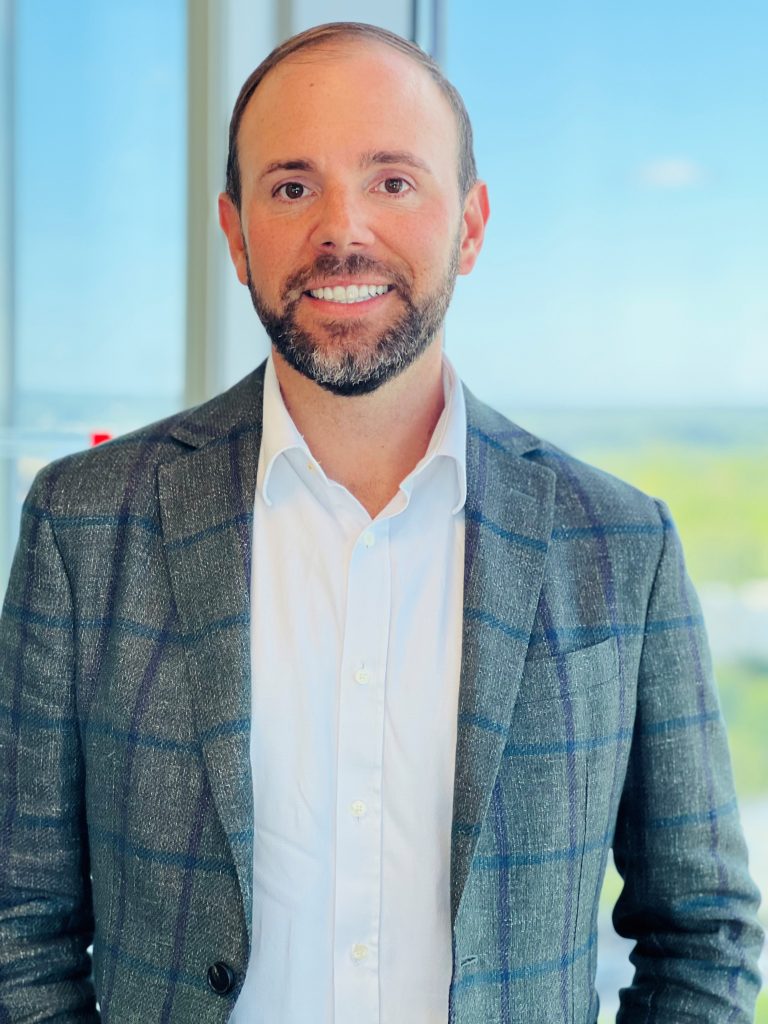
Samuel Norris (MBA ’24), Senior Vice President, Commercial & Middle Market Banking, First Bank, & Owner/Operator, Posh Potty & Events LLC

As a 2024 graduate of the Wake Forest Online MBA program, what was the single most valuable course or skill you immediately applied to your work at the bank?
One of my first classes was with Dr. Amy Wallis—behavior and leadership in organizations. We read “The 5 Dysfunctions of a Team” [by Patrick Lencioni], and I was so impacted by it that I brought the book to work for my team to read. It was immediately applicable, especially with organizational changes taking place. But honestly, Dr. Mark Johnson’s courses—tactical asset allocation, advanced financial management and financial modeling—really sharpened my skills and helped me be more impactful as an advisor to my clients. Right away, I was using what I learned about financial modeling and team dynamics at the bank.
What factored in your decision to choose an online format for your MBA? How did the flexibility and structure of the program specifically benefit your career transition and daily work life?
I always wanted to get my MBA, and as I was approaching 40… it was now or never! My wife and I sat down during the COVID pandemic and agreed that if I pursued another degree, it needed to work for the whole family. That’s what pushed me toward the online format. I had previously taken part in a Wake Forest leadership program through my prior role at BB&T and was impressed by the professors and curriculum. When it came to selecting the right place to receive my MBA, I chose Wake Forest because the online MBA gave me the flexibility to still be present at home and continue to be a high performer at work. I was apprehensive about the course load, but after taking a few classes, I found it manageable. There was enough structure built in that I never lost focus, and Wake Forest gave me practical tools for time management. It allowed me to balance work, family and study time without dropping the ball on any of them.
As a commercial banker working in Raleigh [a rapidly growing market], what opportunities are you most excited about for your clients? What is your favorite part of helping businesses grow in the local market?
We’re a thriving market in Raleigh, largely insulated from national economic trends. The economic impact that bankers have is huge; providing capital directly injects money into the economy at every level: state, local, national and even global. There’s no greater gratification than seeing a fleet of vehicles I financed or a building that allowed a manufacturer to grow. The most exciting part for me is witnessing our community’s growth firsthand and knowing I played a small part in it.
Which core principles from your MBA—like financial modeling, strategic management or market analysis—do you rely on most heavily when evaluating a loan or crafting a financial solution for a middle-market client?
The tactical asset allocation and financial modeling classes really rounded out my skill set. I serve middle market clients—think $20M–$500M in revenue—so I help clients understand audits, capital structure and strategic goals like exit planning or M&A. The ability to break down a business’s value with financial modeling and advise on capital structure sets me apart from my peers. Those MBA skills I acquired are at the core of how I approach every deal or client consultation.
How did you and your wife first come up with the concept for Posh Potty & Events? Was there a specific gap in the events market you were looking to fill?
I’ve always had the entrepreneurial itch! On my graduation day from WFU, I saw a restroom trailer and immediately started thinking about the economics. I did some research, checked out market players and ran the numbers using my newly acquired MBA skills. Within two weeks, we bought our first trailer. The goal was to bring professionalism and elevated customer service to an industry that’s not always so professional. Simple things, like answering the phone and following up, set us apart from the beginning.
You’re advising businesses by day and running one by night. What is the biggest difference—or similarity—between those two roles? Has being a banker changed how you manage your own business’s finances?
At the end of the day, it’s about how you treat people and make them feel. Customer service is ingrained in both roles. The big difference is, as a business owner, there’s no helpline. You have to figure things out by trial and error and build your own support system. My banking experience directly impacted how we run finances at Posh Potty. I knew enough about setting up QuickBooks and proper financial infrastructure from the start—much better than relying on Excel or just flying by the seat of my pants!
How do you effectively manage the time demands of a full-time Commercial Banker position, the responsibilities of a business owner and your personal life? What is your secret to work-life balance (or blend)?
In the beginning, there was no real structure, especially as the business grew and we added more trailers. Time management skills from the MBA helped me organize logistics. If I had to get up at 5:00 a.m. to fit everything in and be present for my family, I did it. My wife handles bookkeeping and billing, and I do logistics and operations. We involve our kids, and that gives them pride and real skills in entrepreneurship. It’s all about creative time management. You can make it work if you keep your priorities straight.
The name of your business – “Posh Potty & Events” – suggests a focus on quality. Can you tell us more about the “Posh” aspect of Posh Potty & Events and how you are building a unique brand in the event services industry?
We wanted to bring professionalism and an elevated experience to an industry that isn’t always so polished. Our trailers have luxury features for high-end events, but it’s really about service—answering the phone, following up, being reliable. Simple things build a unique brand in this space. The ‘Posh’ part isn’t just about the look of the trailer—it’s about every client interaction being memorable for the right reasons.
Looking back at your journey over the last couple of years—earning your MBA, moving into Commercial Banking and launching a new business—what is the single most important piece of advice you would give to a current or prospective Wake Forest business student about embracing opportunity and managing a demanding career?
There will be doubts, but you have to take the leap. The flexibility of the MBA program helps you pivot when needed, and the Wake Forest team really works with you to understand your unique scenario. Lifelong learning is crucial, and the MBA gives you depth and breadth in so many areas—marketing, finance, strategy and leadership. You walk away well-grounded for success in any career or business. Prioritize your family and relationships, too. At the end of the day, that’s the most important thing.
Spotlight interview conducted by Alumni Council member Forest Richardson Kocis (’18, MSBA ’19).
