Scaling Finance with Tech & Tenacity
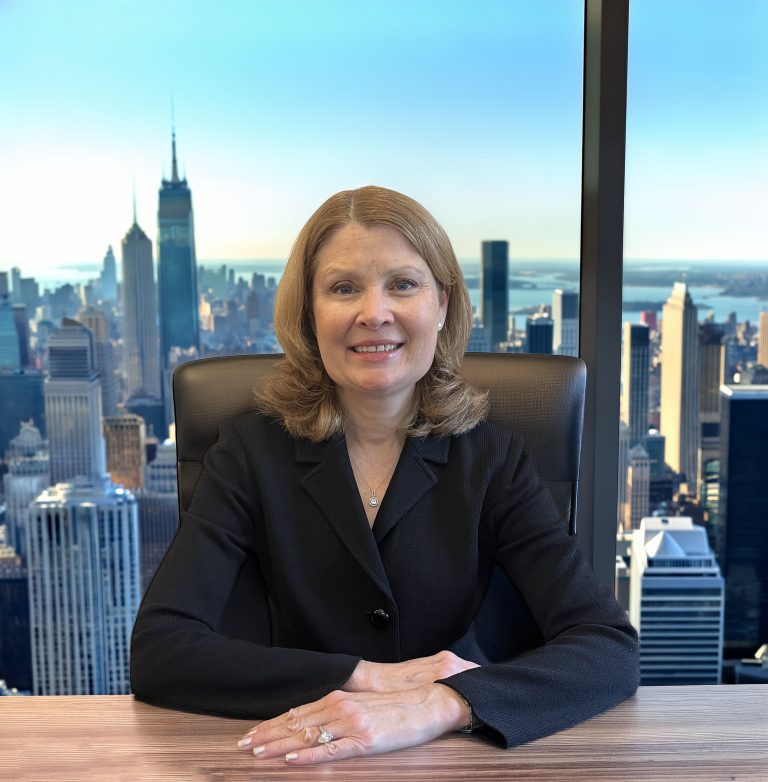
Julie Corey Hubell (’93), COO of Bloomberg Index Services

Was there a specific course or professor – perhaps one who was particularly tough or inspiring – that made an impact on your time at Wake Forest and beyond?
I initially came to Wake Forest thinking I would be an accountant. It didn’t take long for a finance course to quickly change my path into what became a thriving career in the finance field. I still fondly recall reading a super interesting book,Liar’s Poker: Rising through the Wreckage on Wall Street [by Michael Lewis] for one of my classes. That was an amazing class and after taking it, I knew that finance was for me. I remember class discussions where the professor asked if anyone could see themselves in the roles described in the book; fast forward to today and here I am.
I was lucky to get into derivatives in its early days when it was growing very rapidly. I never thought I would work on a trading floor! I was working at Barclays when they acquired Lehman Brothers and I talked my way into an index position. Luck and timing was everything – I learned quickly to run with it and not hold back. You don’t always see the payoff immediately; you have to persist and be resilient and open to starting over.
How do you translate the spirit of Pro Humanitate – which is so often associated with service and “the human spirit” – into the way you lead your teams and cultivate a corporate culture in the middle of New York City?
Bloomberg has a similar philosophy to Pro Humanitate which encourages a culture of giving back for its employees and the communities they are a part of. There are so many opportunities to participate in philanthropic events at Bloomberg. One of my favorite parts is that I can often bring my family along, allowing me to pass the torch of community impact down to my daughters.
You’ve spent nearly a decade at Bloomberg. What is it about the culture or the mission there that has kept you engaged and motivated for so long?
I came to Bloomberg via an acquisition almost 10 years ago. One of the greatest parts of my role is that no two days look the same. I strive to continually learn new skills, foster new relationships and accomplish new goals. There are so many opportunities to collaborate and create relationships across the organization; it’s a dynamic place to work. I love that my role marries tech, data and finance. As AI continues to reshape the landscape, it’s an exciting time to be in this business to see how technology will be able to better equip us for our work and enable us to accomplish things that weren’t previously possible.
What does a “typical” Tuesday look like for the COO of such a massive global operation?
My day typically starts with a rather lengthy approval queue as well as facilitating meetings both within my team and cross-functionally. Whether it’s a business planning and strategy session, a touchbase with technology, meeting with legal on licensing agreements, or preparing for a board meeting, it’s safe to say that there’s a healthy amount of variety!
Planning is critical to being successful. I usually prepare for meetings far in advance to ensure there is a tight agenda with core goals laid out for each session. If you don’t have that, you’re setting yourself up to be derailed. I believe in sending agendas in advance and following up with meeting notes after. I think it’s important to empower my team to lead meetings in my absence as I can’t always be in the room; having a shared collective vision is important so everyone can articulate a consistent message.
In a field that is increasingly driven by AI and automation, what “human” skills do you think are becoming more valuable for new graduates to possess?
Presentation skills are always invaluable, and Wake Forest did an amazing job giving us that practice in my business classes. The ability to ask questions is also a critical skill. Ask the “dumb” questions that uncover things. If you’re not clear about something, you’re probably not the only one.
Learn to embrace the newest technology tools without blindly trusting them. You must know how to use technology, but you cannot simply dump in your data and accept the outcome. Also, instead of always replying to a message or email, consider walking across the office and talking to the person. This simple gesture can save you the time of going back and forth in multiple messages. A lot of people I work with have a hybrid office schedule nowadays, so it’s important to maximize your time in the office by making a point to connect with others. Once you have a personal connection, the working relationship becomes easier.
Living and working in NYC can be intense. How do you find balance, and what is your favorite way to “unplug”?
Unplugging to me looks like spending time with my husband and my two daughters. I am also an avid historical fiction reader. I love exploring the art and culture that is here in NYC, whether through a museum or taking a walk through a new area of the city. I try to be intentional about having balance in life; it’s important to plan and prepare ahead so you don’t become overwhelmed.
What inspired your decision to re-engage with the School of Business, and why do you feel it’s important for alumni to invest their time and experience back into the WFU community?
Everyone has something unique to give back. Pro Humanitate can mean so many different things to different people. For me, I enjoy giving back by leveraging some of the skills I have garnered through my experience – for example, hosting mock interviews for business students. When I was a new working mother, my preferences for giving back were much different than they are today. Thankfully, now I have the time and experience to be able to give back in meaningful ways. I’ve always been drawn to helping others.
Spotlight interview conducted by Alumni Council member Emily Batista (MSBA ‘18).
