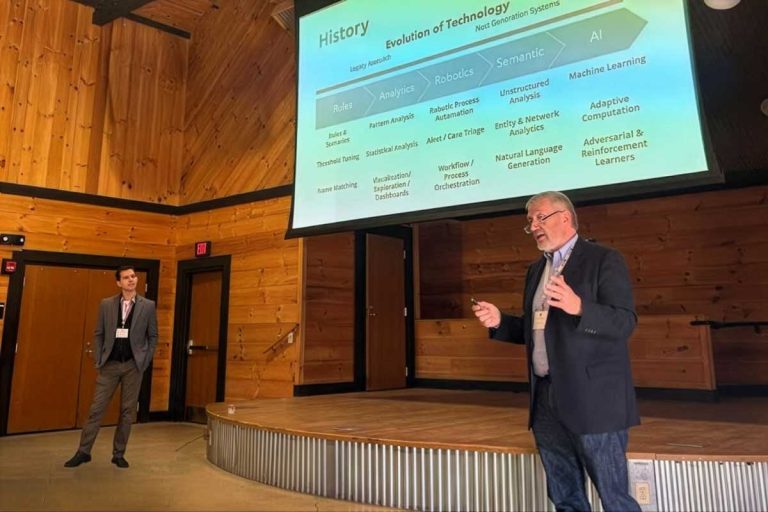
Shannon McKeen teaching

“People should use AI to stretch their capabilities, not just reduce their effort. There’s a temptation to use it as a shortcut, particularly in demanding programs. Instead, AI should complement human abilities and help produce better outcomes.”

Shannon McKeen

Executive Director, Experiential Learning & Innovation; Professor of the Practice

McKinsey & Company office building

For today’s students, AI literacy in business isn’t optional. It is foundational to effective leadership. This reflects a reality that artificial intelligence in business is no longer experimental. It is operational.

AI adoption in business is rapidly increasing.

According to their 2025 Global Survey on the State of AI, McKinsey and Company reports that 88% of organizations are regularly using AI. Additionally, 64% say that AI is enabling their innovation, with ongoing use-case-level cost and revenue benefits. Eighty percent of respondents say their companies set efficiency as an objective of their AI initiatives, but the companies seeing the most value from AI often set growth or innovation as additional objectives.

Generative AI tools have further accelerated this shift — enabling rapid content creation, data synthesis, decision support, and workflow automation across virtually every business function.

Across industries, AI is undeniably transforming finance, marketing, operations, strategy, and leadership in real time. Organizations are changing the way they compete, innovate, and create value:

Careers in an AI-Driven Business World:
HERE’S HOW WE PREPARE STUDENTS

Employers increasingly seek graduates with artificial intelligence skills, AI literacy, and experience applying generative AI tools in business environments. At the Wake Forest School of Business, we prepare students to lead in these environments with confidence and judgment. Unlike programs that treat AI as a standalone elective, the School of Business integrates artificial intelligence across its business curriculum — including analytics, finance, marketing, operations, and strategy.

Instead of focusing on the restrictions and limitations of AI, focus on growing students’ capabilities.

Our faculty uses a structured approach to integrating generative AI into business education to ensure it is blended thoughtfully and responsibly into teaching. Today:

  • 68% of our business faculty use generative AI weekly or daily (more than double the national average in higher education)
  • Faculty actively incorporate AI into assignments and simulations
  • Ethical considerations are embedded alongside technical skills
Students don’t just learn about AI. They learn how to leverage it — thoughtfully, strategically and responsibly.

Across all disciplines, students engage AI in ways that deepen learning:

  • Use custom AI-powered simulations to solve realistic business challenges
  • Apply AI tools to analyze data and generate insights
  • Evaluate algorithmic outputs critically
  • Explore AI’s impact on competitive strategy and leadership
Most importantly, they develop the judgment to decide:
When should AI lead?

When should humans lead?

And how do they work best together?

These applications share a common theme: AI is used to deepen learning, not shortcut it.

Students learn to:

  • Collaborate effectively with AI tools
  • Evaluate outputs critically
  • Recognize bias and limitations
  • Apply ethical frameworks to real business challenges
  • Decide when human judgment must lead

In an environment where AI is becoming ubiquitous, discernment becomes a competitive advantage.

AI brings opportunity — and responsibility. Our approach to its integration is framed by our vision of using business to make the world a better place. At the School of Business, students explore:

  • Bias and fairness in algorithmic systems
  • Data privacy and governance
  • The ethical obligations of leaders deploying AI
They graduate with more than technical fluency. They leave prepared to make principled decisions in high-stakes environments.

Nvidia Office Building

MSM Alum Works to Ensure AI Transparency and Responsibility at NVIDIA

“Trust in technology is built by demonstrating a clear commitment to a defined framework and consistently delivering on promises.”

Michael Boone (MSM ’14)
Manager, Trustworthy AI Product, NVIDIA
Michael Boone, Wake Forest MSM Alum


Lead from knowledge icon

Faculty must understand AI’s capabilities and limitations before guiding students.

Rapid technological change requires shared experimentation, not rigid directives.

As a business school, our responsibility includes alumni, executives, and regional leaders navigating the same transformation.


 Wake Forest student using Perplexity
Using artificial intelligence in business

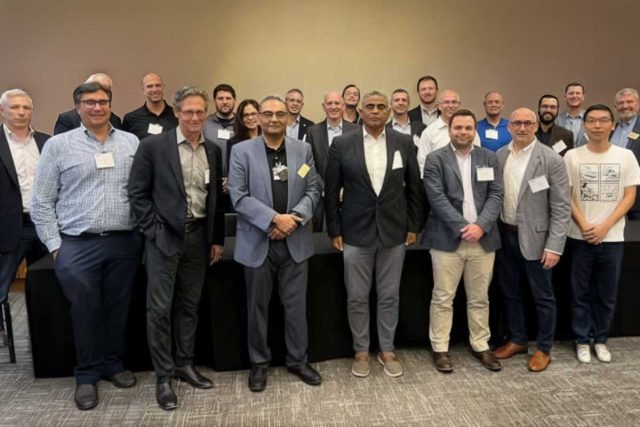
The Center for Analytics Impact Hosts AI Roundtable on Artificial Intelligence in Business

The School of Business’s Center for Analytics Impact partnered with MichaelBest, a Raleigh Law Firm, and the Defense Alliance of North Carolina to discuss the rapidly shifting AI landscape and encourage collaboration across industry, government, and academia.
Center for Analytics Impact holds roundtable forum to discuss AI
Using AI in business

“AI for Good” Conference on Responsible Artificial Intelligence

Sponsored by the Office of Information Systems, The Wake Forest School of Business hosted a conference gathering students, faculty, and industry experts to discuss the current and future impact of AI.
Students at the AI for Good Conference

Frequently Asked Questions About AI in Business Education at Wake Forest

At the Wake Forest School of Business, artificial intelligence is integrated across the business curriculum rather than confined to a single course. Students engage AI tools in analytics, finance, marketing, operations, and strategy courses. Faculty incorporate generative AI, predictive modeling, and AI-powered simulations into assignments and case work, ensuring students gain practical, hands-on experience applying AI in real business contexts.

Yes. AI is embedded throughout our business programs, including analytics and data-focused coursework, while also appearing across MBA and undergraduate business classes. Through the Building AI Fluency initiative, faculty continuously integrate emerging AI tools into teaching and learning. This ensures students develop both technical understanding and strategic insight into how artificial intelligence shapes modern business.

Responsible AI use is central to our approach. Students explore topics such as algorithmic bias, data privacy, governance, and ethical decision-making alongside practical AI applications. Rather than treating generative AI as a shortcut, courses emphasize critical thinking, human judgment, and leadership accountability — preparing graduates to deploy AI thoughtfully and strategically.

Wake Forest developed a faculty-led initiative called Building AI Fluency to ensure thoughtful integration of artificial intelligence into teaching and learning. Today, 68% of business faculty use generative AI weekly or daily — more than double the national average in higher education. This broad faculty engagement ensures students learn from instructors who actively apply AI in real-world business contexts.

Yes. Employers increasingly seek graduates who understand how artificial intelligence affects finance, marketing, supply chain management, analytics, and strategy. Students who develop AI literacy, hands-on experience with generative AI tools, and an understanding of ethical leadership are well positioned to contribute in AI-enabled workplaces and lead through technological change.

Our approach combines AI fluency with principled leadership. Students learn how to collaborate with intelligent systems, evaluate AI-generated insights, and determine when human judgment must lead. By pairing artificial intelligence skills with ethical reasoning and strategic thinking, Wake Forest prepares graduates to shape the future of business responsibly.

Artificial intelligence plays an integrated role in the Wake Forest MBA experience. Rather than treating AI as a standalone elective, the Wake Forest School of Business embeds artificial intelligence across the MBA curriculum — including analytics, finance, marketing, operations, and strategy.

MBA students engage generative AI tools, predictive modeling techniques, and AI-powered business simulations to solve complex, real-world challenges. Courses emphasize not only technical fluency, but also strategic application — helping students understand how AI reshapes competitive advantage, organizational decision-making, and leadership.

Equally important, the MBA program examines the ethical and governance implications of artificial intelligence. Students explore bias, accountability, data privacy, and responsible deployment so they graduate prepared to lead AI-enabled organizations with sound judgment and principled leadership.

Through this integrated approach, Wake Forest MBA students develop the skills employers increasingly seek: the ability to work effectively with intelligent systems while knowing when human insight must lead.

Explore Further

Considering a business program to strengthen your career prospects? Interested in the world-class research being done by our faculty? Or just want to speak with someone to learn more about the School of Business? Here are a few more areas to explore.